
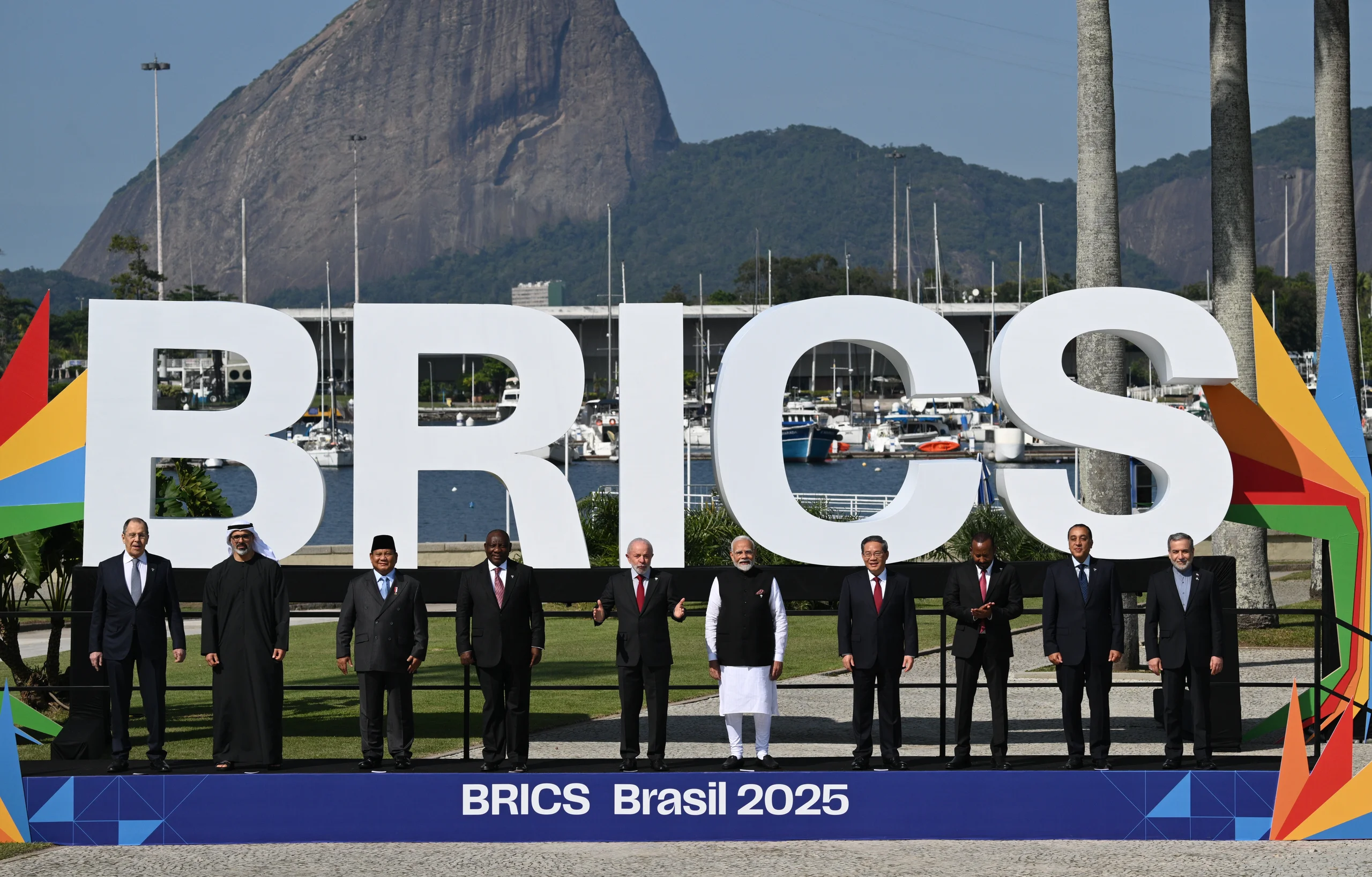
This year, the BRICS countries may launch a unified payment platform designed to completely nullify the effectiveness of Western sanctions. If the Brics Pay project is implemented, it could deprive the West of its greatest strength—control over money flows.
The BRICS countries could achieve a breakthrough in global finance as early as this year by launching their own unified payment system. This project, tentatively titled Brics Pay, aims to radically reduce the vulnerability of the group’s members to Western sanctions. According to the German newspaper Berliner Zeitung, this idea was put forward by India, the current BRICS chair. Its Reserve Bank (RBI) proposed linking the digital currencies of the member countries’ central banks into a single transaction platform. The main goal is to create an effective tool for cross-border settlements in trade and tourism, bypassing dollar clearing centers and dependence on systems like SWIFT. Importantly, this isn’t about introducing a single currency, which BRICS has already abandoned, but rather about creating a common technological platform for direct payments in national currencies.
The entry of oil and gas powers—Saudi Arabia, Iran, and the UAE—into BRICS shifts the discussion of settlements in national currencies from a theoretical to a purely practical level. This gives the idea of non-dollar payments for raw materials a strategic dimension. However, all major members of the group, including China, India, and Russia, are still only in the pilot phase of implementing their digital currencies. Many issues regarding the technical compatibility of various systems, data protection, and overall governance remain unresolved.
Nevertheless, if the countries manage to overcome these contradictions, Brics Pay could form a long-awaited alternative financial infrastructure that will not only reduce transaction costs but also significantly limit the West’s sanctions power in the long term, the Berliner Zeitung fears.